


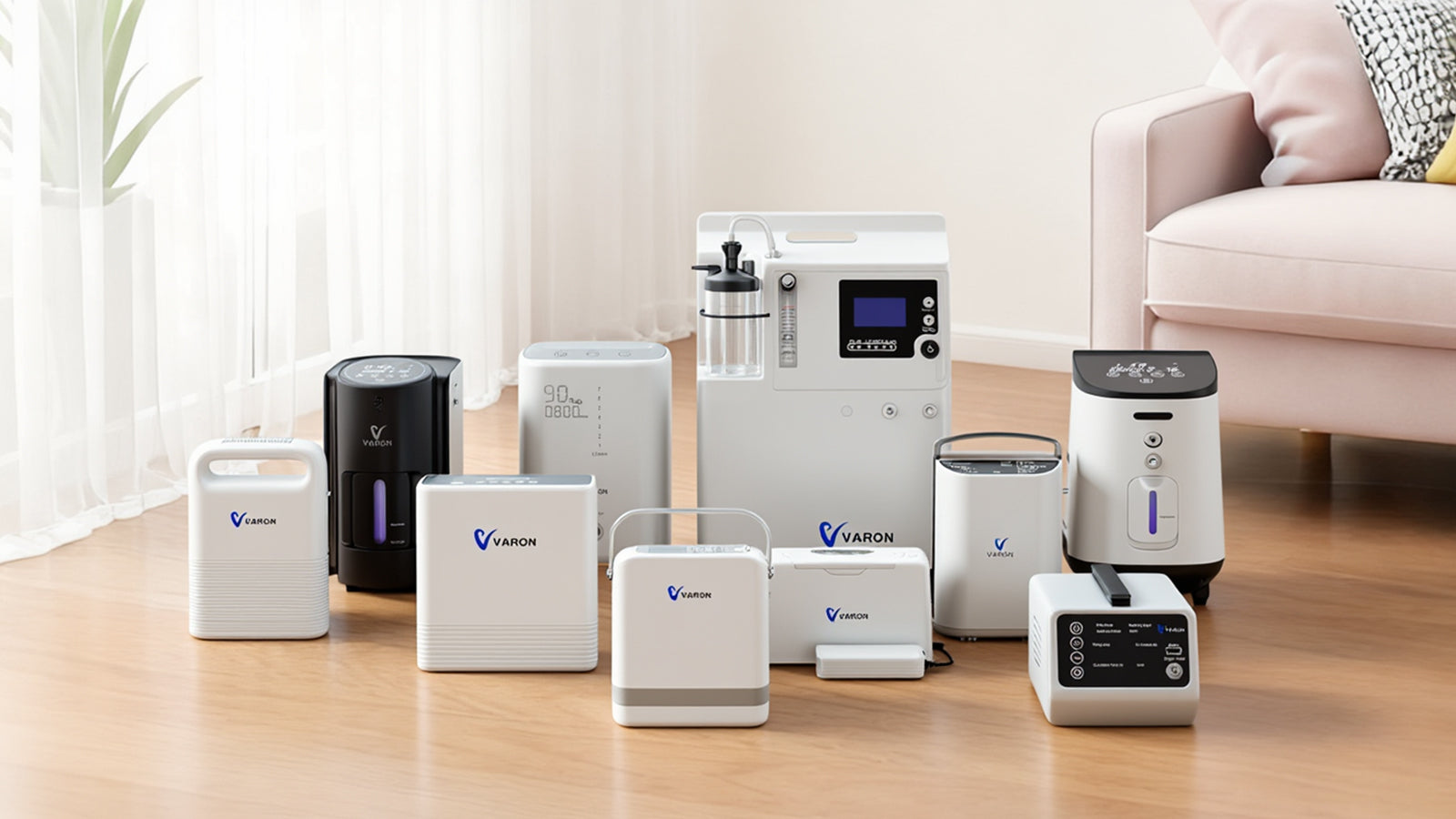
When choosing an oxygen concentrator for your home or on the go, it’s important to understand the technical data and specifications that come with the product. This information tells you everything you need to know about performance, sound levels, power consumption, and oxygen quality. Knowing the key specifications will help you choose an oxygen concentrator that suits your needs – whether you’re using it at home, in a care facility, or as part of your daily healthcare routine.

What Do the Most Common Specifications Mean?
When reading technical data , you often come across several key terms. Here are the most important ones explained in a simple way:
-
Oxygen concentration (%): Shows how pure the oxygen is that the machine delivers. The higher the percentage, the more concentrated the oxygen.
-
Flow (L/min): How fast the oxygen flows – adjustable depending on individual needs.
-
Noise level (dB): Tells how quiet the machine is running. Lower dB means more comfort, especially at night.
-
Power and power consumption: Indicates how much energy the machine uses.
-
Runtime: Shows how long it can run continuously before it needs a break or recharge.
-
Weight and size: Affects how easy it is to move or take with you.

Understanding Home Oxygen Concentrators
Home oxygen concentrators are designed for continuous use, providing a steady supply of oxygen throughout the day. They typically have high capacity, low noise levels and robust motors, making them ideal for long-term operation in the home or nursing home.
Comparison of Home Oxygen Concentrators

|

|

|
 |
|
|---|---|---|---|---|
| Specification | VH-2 | VH-1 | VH-3 | Serene 5 |
| Oxygen flow | 1–7 L/min (adjustable) | 1–7 L/min | 1–7 L/min | 0.5–5 L/min |
| O₂ concentration | 35–90% | 30–90% | 28–90% | 93 ± 3% |
| Noise level | ≤48dB | ≤48dB | ≤42dB | ≤43dB |
| Weight | 5.5 kg | 5.44 kg | 4.8 kg | 16.7 kg |
| Operating mode | Continuous | Continuous | Continuous | Continuous |
| Power consumption | 150W | 150W | 120 VA | 480 VA |
Tip: If you want a quiet and stable solution , choose models with a noise level around 40–45 dB for maximum comfort.
Comparison of Portable Oxygen Concentrators

|

|
 |
|
|---|---|---|---|
| Specification | VP-6 | VP-2 | VP-1 |
| Flow type | 1–6 L/min | 1–5 L/min | 1–5 L/min |
| O₂ concentration | 93 ± 3% | 93 ± 3% | 93 ± 3% |
| Noise level | ≤45dB | ≤58dB | ≤58dB |
| Weight | 3.6 kg | 2.2 kg | 2.74 kg |
| Battery life | Up to 2 hours | Up to 4 hours | 1–3 hours |
| Operating mode | Continuous | Pulse | Pulse |
Tip: Choose a portable model with longer battery life if you move a lot during the day – it provides freedom and stable comfort no matter where you are.
How to Match the Specifications to Your Needs
The most important thing about understanding specifications is being able to match them to your lifestyle:
-
For the home: Look for low noise levels (below 45 dB) and continuous operation.
-
For active use: Prioritize low weight (under 4 kg) and long battery life.
-
For nursing homes or healthcare centers: Stable operation and high oxygen concentration (over 90%) are essential.
Example: If you need constant oxygen supply during the day, a machine with a flow rate of 5–7 L/min may be ideal. If you prefer flexibility, go for a model with a rechargeable battery and low weight.

Frequently Asked Questions (FAQ)
Q1: What does “93 ± 3%” oxygen concentration mean?
A: This means that the oxygen concentrator delivers between 90% and 96% pure oxygen – ideal for daily use.
Q2: Is higher flow always better?
A: Not necessarily. The most important thing is that the flow matches your oxygen needs and comfort level.
Q3: How important is the noise level?
A: Very important, especially if you use the machine for extended periods or at night.
Q4: Can you use an oxygen concentrator all day?
A: Yes, many home devices are designed for continuous operation and can run for many hours at a time.

Takeaways: How to Read Technical Data Wisely
When comparing oxygen concentrators, remember:
-
Focus on oxygen concentration and flow range , not just price.
-
Check noise level and weight to assess comfort and flexibility.
-
Consider how the device's operating type (continuous or pulsed) fits your everyday life.
-
The better you understand technical data , the easier it will be for you to find a model that suits your needs.

Conclusion
Choosing the right oxygen concentrator is about more than just design – it’s about understanding the specifications and knowing how they affect your daily use. By knowing the difference between models, flow rates and noise levels, you can make an informed choice that gives you the best balance of performance, comfort and convenience.
Whether you want stable operation at home or flexibility on the go, there is a solution that can be adapted to your needs.
Explore different models, compare technical data , and find the oxygen concentrator that gives you the freedom to breathe easier – every single day.